
🌿 General Information
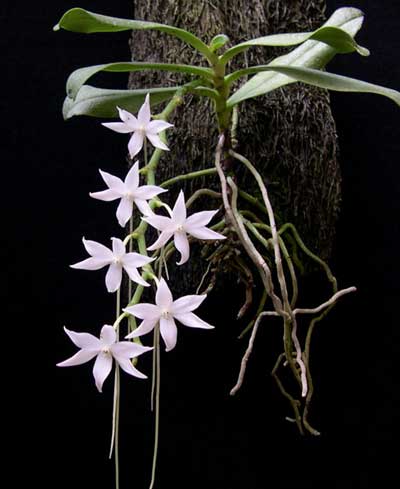
Brassia is an epiphytic orchid native to South America (Brazil, Peru, Antilles), famous for its large, fragrant flowers with very long sepals, which have earned it the nickname spider orchid. 🕷️ The pseudobulbs form dense clumps from which leaves up to 40-50 cm develop. In summer, it produces long spikes with greenish-white or cream-colored flowers, speckled with dark spots, with an intense and enveloping fragrance.
☀️ Light
It loves intense light: in spring, autumn, and winter it can even receive direct sunlight. In summer, however, shade the plant to avoid leaf burn. A south-facing exposure is ideal for stimulating flowering. 🌞
🌡️ Temperatures
The ideal temperature is between 18 and 25°C. In autumn and winter, keep it in a heated environment, away from direct heat sources. The minimum winter temperature should not drop below 10°C. In summer, it can tolerate over 30°C, provided the environment is humid and well-ventilated. 💨
💧 Watering
Water abundantly and regularly in spring and summer, preferably in the morning with non-calcareous and slightly lukewarm water. The roots do not like to dry out, so maintain a consistent schedule. Increase humidity with frequent misting. In winter, reduce watering to allow the pseudobulbs a slight rest, keeping the roots moist only through misting. 🌱
🌻 Fertilization
Fertilize every 15 days during the vegetative phase (May-September). In winter (October-April), suspend fertilization. Fertilizer can be misted directly onto leaves and aerial roots in minimal doses. ⚗️
🌱 Propagation
At maturity, the plant produces numerous shoots from each pseudobulb, growing rapidly. Divide the clumps (groups of 4-6 pseudobulbs) only when they are well developed, preferably in spring or early autumn. ✂️
🪵 Substrate
Use shredded non-resinous bark, with the possible addition of fern fibers and sphagnum moss. Simple and effective for replicating natural conditions. ♻️