
🌿 General Information
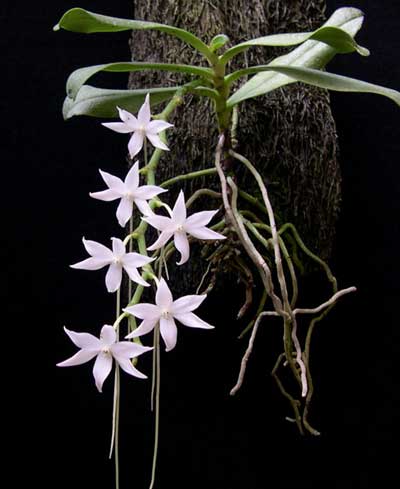
Bulbophyllum is the largest genus in the entire Orchidaceae family, with over 1800 species — one of the most numerous genera in the entire plant kingdom. 🌍 Native to Australia, Southeast Asia, Africa, and South America (with the greatest diversity in Papua New Guinea), these orchids are found in tropical and subtropical rainforests and cloud forests, at both high and low altitudes. Their growth habit varies enormously: from terrestrial species to giant climbing epiphytes. They can flower from the rhizome or the shoot, depending on the species.
The information provided here offers general guidelines: always adapt them to your geographical location, growing environment, and the specific needs of the species.
☀️ Light
It's difficult to give universal recommendations given the vast variety of habitats. As a general rule: the broader the leaves, the less light is needed. Bulbophyllum typically requires intermediate light — less than Cattleya, more than Phalaenopsis. More intense light (without burning the leaves) promotes better and more frequent flowering. They grow well indoors with good lighting. 💡
🌡️ Temperature
Warm-to-intermediate climate plants: ideal between 21 and 27°C, but they adapt to a range of 7-35°C. They do not tolerate frost. To flower, they need a night temperature drop of 6-8°C. Species from high-altitude areas of Papua New Guinea prefer cooler temperatures. Minimum temperature: 10°C for tropical forms, 15°C for equatorial species. 🌙
💧 Water and Humidity
Many species come from very rainy environments and require abundant water. In pots: water every 3-4 days, allowing the medium to dry out only slightly between waterings. On a raft: even twice a day. If new leaves are smaller than old ones, the plant is thirsty! 🚰
The substrate should never dry out completely. In winter, it can be kept slightly drier. Ideal ambient humidity is around 60%. Good air circulation is essential to prevent foliar fungal diseases. 💨
🌸 Flowering
They flower mainly in spring, early summer, or early autumn, but under the right conditions, they can flower year-round. Flowers vary greatly in size and are highly specialized to attract specific insect pollinators — many have a strong, pungent odor that attracts flies. 🐝
⚗️ Fertilization
In the absence of specific indications for the species, use a balanced fertilizer twice a month:
- For growth: 20-20-20 (NPK) — 1 g/L, every 14 days
- For flowering: 0-52-34 (MPK) — 1 g/L, every 14 days
For divisions, use half concentration. Young plants benefit from a nitrogen-rich fertilizer until their first flowering.
🪵 Substrate, Repotting, and Propagation
They are grown on wood/bark slabs, in shallow pots, or in baskets. The important thing is to maintain constant moisture at the roots. Sphagnum moss is excellent because it retains moisture, but it should be replaced when it starts to degrade or accumulate salts. Repot as little as possible, preferably in spring or autumn, approximately every 3 years. For division, use 1-2 pseudobulbs per division with sterile tools, and keep the plants in a humid environment during root recovery. ♻️
🐛 Pests and Problems
Due to the high humidity required, Bulbophyllum are susceptible to fungal and bacterial diseases: root rot, leaf spots, desiccation, and flower deformities. Good air circulation is the best prevention. 🚫