
🌬️ Tillandsias, Daughters of the Wind
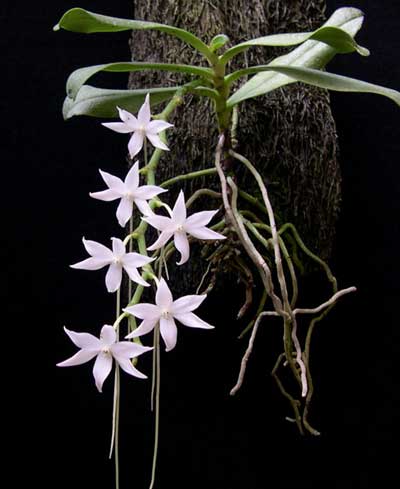
With over 700 species found mainly in Central and South America, Tillandsias are the most collected and appreciated epiphytic plants in the world. Also known as "Air Plants", they do not belong to the orchid family but to the Bromeliaceae family (subfamily Tillandsioideae). 🌿
From a cultivation perspective, they share many similarities with orchids: they are epiphytic, grown on rafts or without support, and do not tolerate ordinary pots and substrates. In nature, they colonize tree branches, power lines, telephone poles, roofs, deserts, and swamps. Their most extraordinary characteristic? They feed on air. They absorb water and nutrients directly from the atmosphere through their leaves.
☀️ Cultivation and light
Tillandsias thrive outdoors, hung in the shade of a tree or tied to a piece of bark in a position protected from direct sun during the hottest hours. In general, they love good light all year round, with shading during the hottest summer hours. In the milder regions of Southern Italy, they can remain outdoors all year round. 🌞
They also adapt to indoor environments, provided there is enough light and good ventilation. The support on which they are placed is indifferent.
💧 Water
Outdoor Tillandsias receive dew and rainwater. During rainy periods, they do not require special care. At other times, mist the leaves with water twice a day in summer when temperatures are high. 💦
In winter, they do not tolerate excess water well: it is preferable for them to have too little rather than too much. Watering should be adjusted according to the season, light, age, and morphology of the plant:
- Spring/Summer: abundant
- Autumn/Winter: limited
- With low light and low temperatures: less water
- Filiform leaves: water more often than varieties with fleshy leaves
⚗️ Fertilization
Although they adapt to poor environments, in nature Tillandsias receive essential nutrients that may be lacking in cultivation. Use a balanced fertilizer (e.g., 20-20-20) at 1 g/L of water, misting the plants:
- Spring/Summer: twice a month
- Winter: once a month