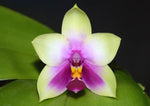
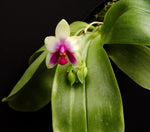
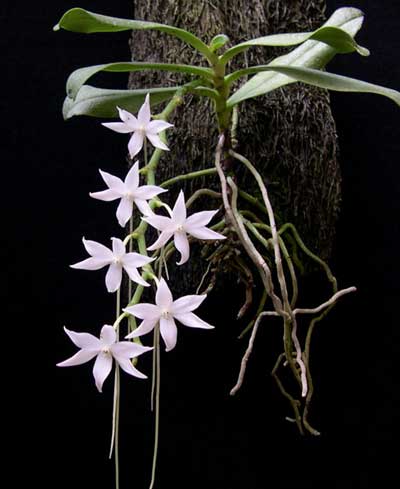
🌳 Description:
-
Family: Orchidaceae
-
Genus: Phalaenopsis
-
Domestic use: Botanical orchid suitable for growing indoors and in temperate greenhouses, appreciated by collectors for its natural habit and the species' characteristic flowering
-
Flowering: Seasonal flowering, with inflorescences bearing flowers of the species' typical size and shape; under optimal conditions, it can re-flower multiple times a year.
🌞 Light exposure: Medium, indirect, diffused light. Avoid direct sunlight which can burn the leaves. Ideal near an east or west-facing window, or a south-facing window shaded by a curtain.
🚿 Watering: Water when the substrate is almost completely dry, generally every 7–10 days in summer and every 10–14 days in winter. Prefer immersing the pot for 10–15 minutes, then letting it drain completely. Avoid water stagnation at the crown. Some species require a resting period with reduced watering: check the specific needs of the species.
🌡️ Minimum tolerable temperature and cultivation temperature: Thermal requirements vary depending on the species and its area of origin. In general, cultivation in a medium-warm range: ideal daytime temperature 20–28 °C, nighttime 15–20 °C. Minimum tolerable temperature: 15 °C. Avoid abrupt temperature changes and cold drafts.
🌱 Soil type and repotting: Recommended substrate: pure sphagnum moss, fine bark, or a draining mix depending on the species' habit (epiphytic or lithophytic). Repot every 1–2 years, preferably after flowering, when roots are abundantly growing out of the pot or the substrate has deteriorated.
🌿 Fertilization: Fertilize every 2 weeks during the active growing season (spring-summer) with a balanced orchid fertilizer (e.g., 20-20-20) at half the recommended dose. In autumn-winter, reduce to once a month or suspend during vegetative rest.
✂️ Pruning or other recommended agricultural treatments: After flowering, remove the spent flower stalk at the base or do not remove it, varies according to the species, check the specific needs of the species. Remove dry or damaged leaves with sterilized tools. Some species benefit from a resting period with cooler temperatures and reduced watering to stimulate flowering.
💧 Environmental humidity: Ideal humidity: 60–80%. In dry environments, mist aerial roots (not leaves) or place the pot on a tray with gravel and water. Always ensure good ventilation to prevent rot.
The dimensions are purely indicative and refer to an adult plant.
Plants with possible damaged or spotted leaves due to importation.
Plants from seed, the color or shape of the flower may vary slightly.