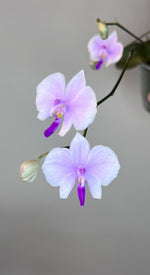
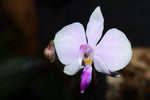
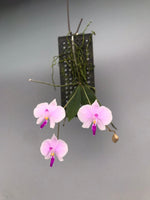
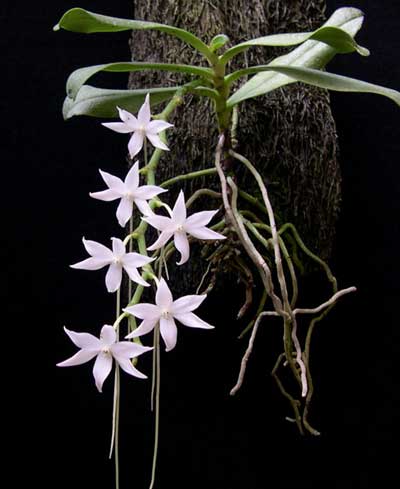
🌳 Description:
-
Family: Orchidaceae
-
Genus: Phalaenopsis
-
Group: Aphyllae (deciduous or semi-deciduous species)
-
Domestic Use: Botanical orchid of great collector's interest, suitable for experienced growers; fascinating for its distinct vegetative cycle and flowering that often emerges before or during leaf regrowth
-
Flowering: Seasonal, typically in winter-spring; flowers appear on the stem while the plant is still dormant or awakening vegetatively
🌞 Light Exposure: Medium-high, indirect, and diffused light during the growing season. In winter, during dormancy, light is less critical. Avoid direct sun during the central hours of the day.
🚿 Watering: Highly seasonal. During active growth (summer): water regularly when the substrate is almost dry. In autumn, reduce progressively. In winter, during complete dormancy: almost entirely suspend watering, maintaining only slight humidity to prevent root desiccation. Gradually resume with spring awakening.
🌡️ Minimum Tolerable Temperature and Cultivation Temperature: Cultivation in cool-intermediate range: summer daytime temperature 22–28 °C, nighttime 15–18 °C. In winter, during dormancy, they tolerate low temperatures: minimum 13 °C. Winter cold is essential to stimulate flowering. Avoid excessive heat in summer.
🌱 Soil Type and Repotting: Very well-draining substrate: fine bark, perlite, or mounted on a support (cork or wood raft) to promote rapid root drying. Repot every 2 years or when the substrate deteriorates, preferably at the end of dormancy, before vegetative awakening.
🌿 Fertilization: Fertilize only during the active growing season (spring-summer), every 2 weeks with a balanced orchid fertilizer at half strength. Completely suspend fertilization during winter dormancy.
✂️ Pruning or Other Recommended Agronomic Treatments: Remove the spent flower stalk at the base after flowering. Remove dry leaves at the end of the season with sterilized tools. The winter dormancy period with cold and drought is essential: do not attempt to keep the plant growing year-round.
💧 Environmental Humidity: During growth: ideal humidity 60–75%. During winter dormancy: lower humidity (40–50%) to simulate natural dry season conditions. Always ensure excellent ventilation, which is crucial for this group.
The dimensions are purely indicative and refer to an adult plant.
Please note that this plant is part of the Phalaenopsis Aphyllae section, so it may not have leaves at the time of purchase!