🌳 Description:
-
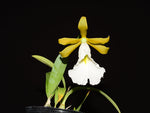
Scientific name: Prosthechea Marina (Prosthechea mariae × Prosthechea citrina), also known as Encyclia Marina.
-
Family: Orchidaceae.
-
Genus: Prosthechea, a hybrid between two species also found in the Encyclia and Euchile classifications.
-
Origins: A hybrid obtained in cultivation from two species native to Mexico, Prosthechea mariae and Prosthechea citrina. It is not a naturally occurring botanical species.
-
Domestic use: An orchid best displayed in a bright, well-ventilated environment, leaving space beneath the foliage to observe its arching or pendulous growth and enjoy its fragrant flowers.
-
Key characteristics: It combines the influence of the large labellum of mariae and the yellow tones of citrina. It forms pseudobulbs with leathery leaves and may develop leaning or pendulous growth. The color, shape, and size of the flowers can vary among specimens of the same cross; therefore, the identical characteristics of a single parent should not be attributed to all plants.
-
Average adult size: Approximately 15–30 cm in vegetative growth, with flowers measuring about 6–10 cm; measurements vary by specimen. In its pendulous growth habit, part of the foliage develops downwards and the clump spreads laterally.
-
Flowering: Generally between spring and summer, with a few relatively large flowers compared to the foliage. The period may vary depending on the growth cycle and environmental conditions.
-
Fragrance: Fragrant; the intensity and nuances of the fragrance may vary among specimens.
🌞 Light exposure: Medium, bright, filtered light. A little gentle morning sun can be introduced gradually, avoiding the intense midday sun and overheating of the leaves. Always combine with good ventilation.
🚿 Watering: Water abundantly during the development of new growth and roots, allowing it to dry out well between waterings. As the pseudobulbs mature, gradually reduce watering during the rest period without causing severe dehydration. Gradually resume watering when new roots appear. Frequency depends on temperature, humidity, and drying speed: avoid rigid schedules and waterlogging of tender shoots. Prefer rainwater or low-mineral water.
🌡️ Minimum tolerable temperature and growing temperature: Prefer intermediate conditions, approximately 18–26°C during the day during growth, with cooler nights. During the rest period, prudently maintain minimum temperatures around 12°C, avoiding prolonged cold with wet roots. The influence of citrina suggests particular attention to persistent heat: protect from overheating and promote a moderate temperature difference between day and night.
🌱 Soil type and repotting: Requires very well-aerated roots and rapid drying. Epiphyte supports or coarse bark in highly draining containers are suitable, leaving room for the foliage to develop. Repot approximately every 2–3 years or when the growing medium deteriorates, preferably when new roots are emerging; only intervene on the supports when necessary, limiting root handling.
🌿 Fertilization: Apply a low-concentration orchid-specific fertilizer every two weeks during active growth, to already moist roots. Alternate with water-only waterings to limit salt buildup. Reduce or suspend during the rest period and resume with new growth.
✂️ Pruning or other recommended horticultural treatments: Remove completely dry stems with clean tools. Keep healthy pseudobulbs even when they lose their leaves, as they serve as reserves for the plant. Remove only dead or damaged parts and do not force naturally pendulous growth upwards.
💧 Ambient humidity: Approximately 60–80% during growth, accompanied by constant air circulation. During the rest period, avoid both excessive dehydration and misting so frequently that it prevents the roots from drying. Do not leave standing water on new growth overnight.
The dimensions are purely indicative and refer to an adult plant.