Tax excluded · Shipping calculated at checkout
At our nursery, we grow different varieties of the same plant. Plants are living organisms and can therefore differ from one another. Variations in colour and size are possible.
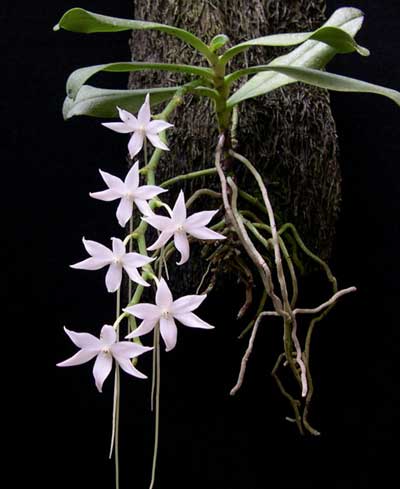
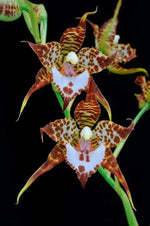
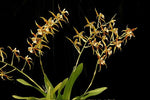
The images shown alongside our products are for illustrative purposes. These photos provide a realistic idea of what the plant may look like when properly cared for. The specifications listed refer to the plant you will receive. Please read the characteristics carefully before placing your order.
What are example images?
We offer an extremely wide and varied selection, with thousands of plants. As individual plants change shape, colour and size from week to week, it is impossible for our small team to photograph them all.
You will therefore rarely receive the exact plant shown in the photo. Our aim is to offer you a pleasant, environmentally friendly shopping experience with complete peace of mind.
If you prefer to browse the plants in person, we also have a physical shop. Please see our contact page for opening hours and further information.
-
Description
🌳 Description:
- Scientific name: Rhynchostele cordata (syn. Lemboglossum cordatum)
- Family: Orchidaceae
- Genus: Rhynchostele (botanical species)
- Origins: Mexico and Central America; grows epiphytically in humid and misty montane forests at medium-high altitudes (1500–2500 m)
- Domestic use: Epiphytic indoor orchid suitable for cultivation in bright and cool environments
- Notable characteristics: Botanical species with white or white-pink flowers with pink-purple spots on the cordate (heart-shaped) lip (hence the name); compact pseudobulbs with strap-shaped leaves; abundant and fragrant flowering; highly appreciated by collectors for its elegance and fragrance
- Average adult size: 15–30 cm; flower spikes 20–40 cm
- Flowering: Typically autumn-winter, with spikes bearing numerous fragrant flowers
- Fragrance: Yes — pleasant and persistent
🌞 Light exposure: Medium, filtered and diffused light, without direct exposure to the sun. Ideal near a bright window with light shading.
🚿 Watering: Abundant during active growth; reduce after flowering, allowing the substrate to dry partially between waterings. Use rainwater or reverse osmosis water.
🌡️ Minimum tolerable temperature and growing temperature: Intermediate-cool climate — nighttime low 8–12 °C, daytime 16–24 °C. The drop in nighttime temperatures is essential to stimulate flowering.
🌱 Soil type and repotting: Well-draining substrate of pine bark, sphagnum, or a specific mix for epiphytic orchids. Repot every 2 years or when the substrate degrades, preferably in spring.
🌿 Fertilization: Every 2 weeks during active growth with a low-concentration fertilizer specific for orchids. Reduce in winter.
✂️ Pruning or other recommended agronomic treatments: Remove spent flower spikes at the base. Remove dry pseudobulbs and rotten roots during repotting.
💧 Ambient humidity: Medium humidity (50–70%). Ensure good ventilation. In dry environments, use a humidifier or a tray with moist expanded clay.
The dimensions are purely indicative and refer to an adult plant.
How we ship your orchids
Discover more →